
Welcome back! In the most recent episode of REALity Check, I talked about differentiation more philosophically. Here, I’d like to quickly address five specific, research-based strategies to addressing differentiation in the secondary regular education classroom. I think we all know that differentiation is key in providing quality, Tier 1 interventions for students, but it’s difficult to actually put it into practice when we have so many other things — covering content, giving quality feedback, grading, managing behaviors.
So I dove into the research. My hope here is to not overwhelm us with ideas, but give us a deep well from which we can draw ideas and inspiration.
Strategy #1: Entry Points
We all know how important frontloading content is. It engages students and gives them a framework with which to approach the unit. Or, think about the various learning cycles that exist: Explore, Explain, Apply model; the 5E’s model; The Workshop model. Each of these begins with engaging exploration.
But how might we differentiate our entry points to a unit or lesson? What makes something engaging for one may not make it engaging for all.
So let’s talk entry points.
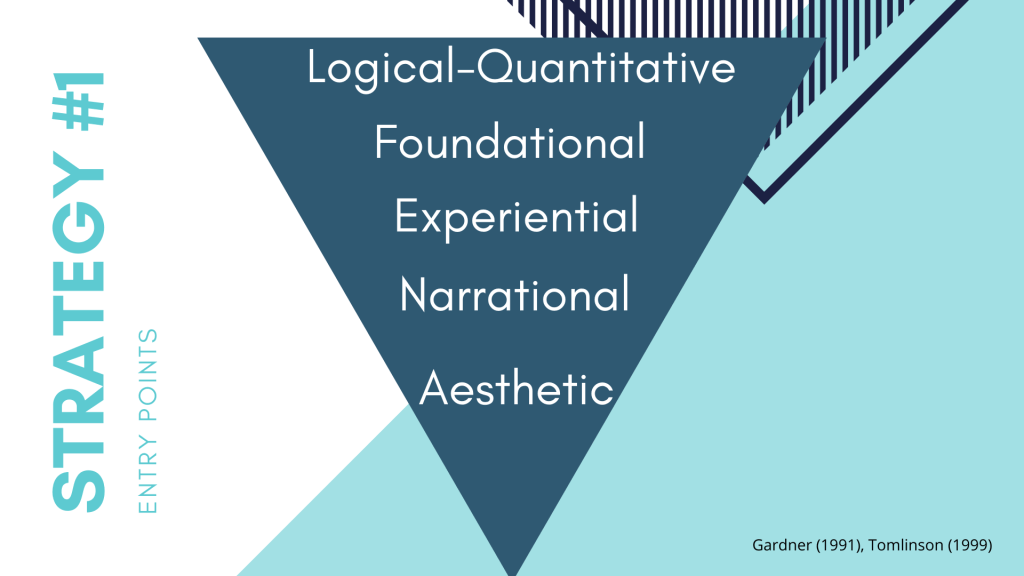
Here, our research is strengthened by Howard Gardner. Each of these various entry points represents a different strength or intelligence.
- We might offer a narrational entry point by presenting a story or narrative about the topic in question.
- We might offer a logical-quantitative entry point by using numbers or applying deductive reasoning to the topic in question.
- We might offer foundational entry points by examining the philosophy and vocabulary that support the topic in question.
- We might offer aesthetic entry points by focusing on the sensory or artistic features of the topic in question.
- Or we might offer experiential entry points by using a more hands-on approach where students are involved with materials that represent the topic in question.
(adapted from here)
Have students choose a method, or vary these throughout the semester.
Strategy #2: Flexible Grouping
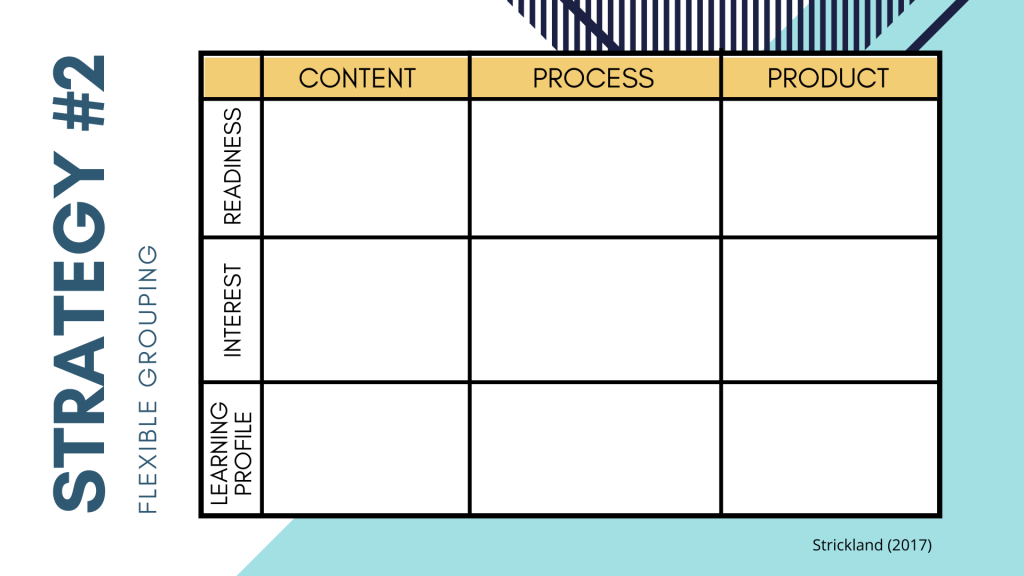
Most of us incorporate some form of group work all the time. How might we build on that by considering flexible grouping an integral part of a differentiated classroom? How might we offer more robust, flexible options when creating groups?
Consider first what we differentiate based on:
Student Interest
How might you differentiate activities based on what students want to read, investigate, or complete?
Learning Profile
- Can students work alone? With a partner? In a group?
- Are they more visual, auditory, or kinesthetic learners?
- Would students work best analytically, practically, or creatively?
- Would they rather compete against others? Themselves? Collaborate?
- Is there a more introverted or extroverted option?
Readiness
- Do students have learning gaps with prerequisite skills? How could you provide support with graphic organizers, vocabulary lists, minilessons, etc.)
- Are there differences in reading levels?
- What about students who come in with a significant body of knowledge, understanding, or skill about a topic? How will you ensure that you collect appropriate evidence? How will these students continue to grow?
- How will you differentiate the pace of learning, especially for students who are likely to quickly master the material?
- And… everything else. Writing ability, research skills, resources at home.
How might you create groups based on these indicators? This book has been a tremendous resource for me. Here’s a list of examples of how you might begin to use flexible grouping as a differentiation strategy.
Strategy #3: The HyperDoc
Ahhhh. How do I love the Hyperdoc? Let me count the ways…
Before I get into things, take a look at this presentation my colleague Maureen Ritter and I put together last month for our district’s Teachers Teaching Teachers.
Now, the research here is a lot less developed, but I would argue that it has its roots in the ideas of personalized agendas or choice boards. Maureen and I found a lot of value in this book.
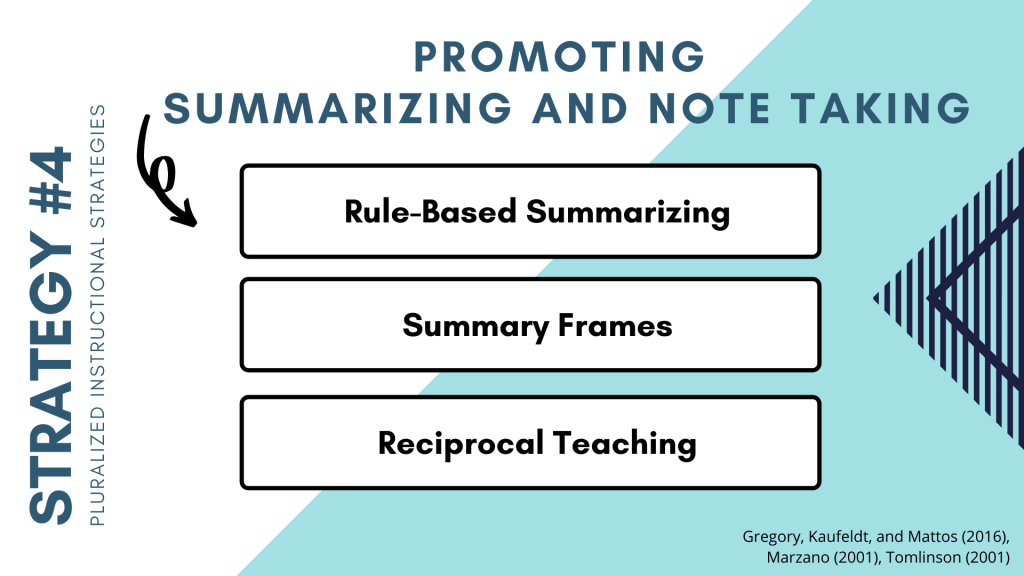
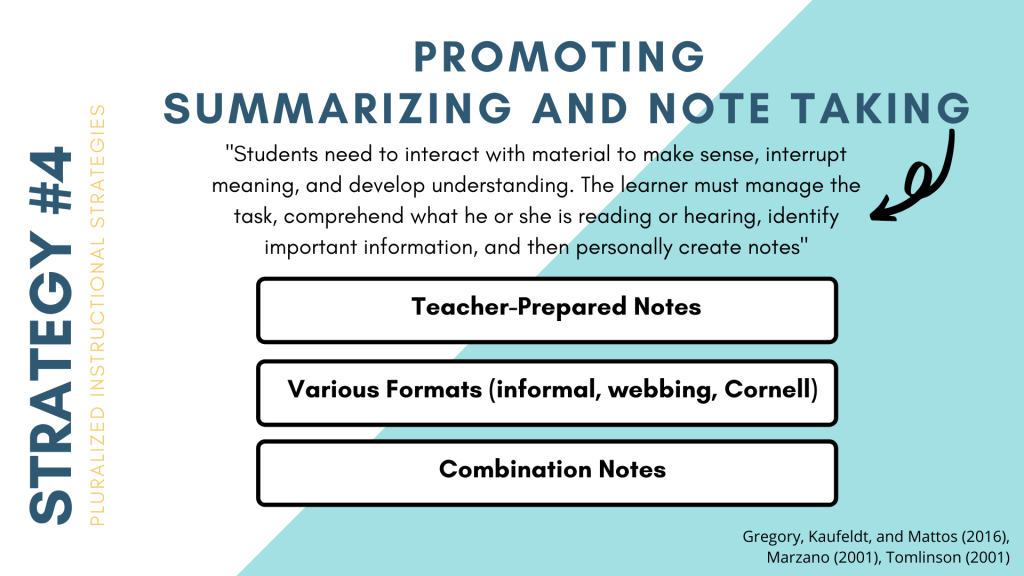
Strategy #4: Pluralized Instructional Strategies
We know what there are key instructional strategies that work cross-curricularly (Think Marzano, people.) As you approach these strategies, how could you provide multiple strategies?
Strategy #5: GRASPS (RAFT 2.0!)
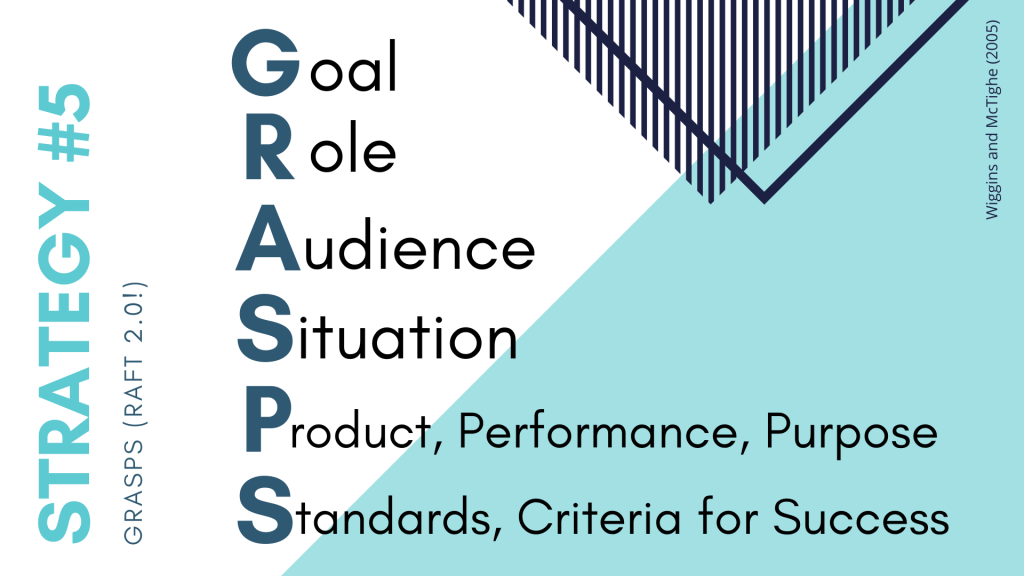
GRASPS isn’t anything all that revolutionary, but I find when I use it as a framework, it allows for student choice in product. Remember, you can hold some of the cards here and control parts of the GRASPS, and give up control in other areas.
How do I start?
Feel free to download the Bingo sheet above. If you get BINGO before the end of the year, contact Shanna or me and we’ll deliver you a prize!
Happy differentiating!

