
Welcome to the recap of Upping Your Twitter Game, Part I.
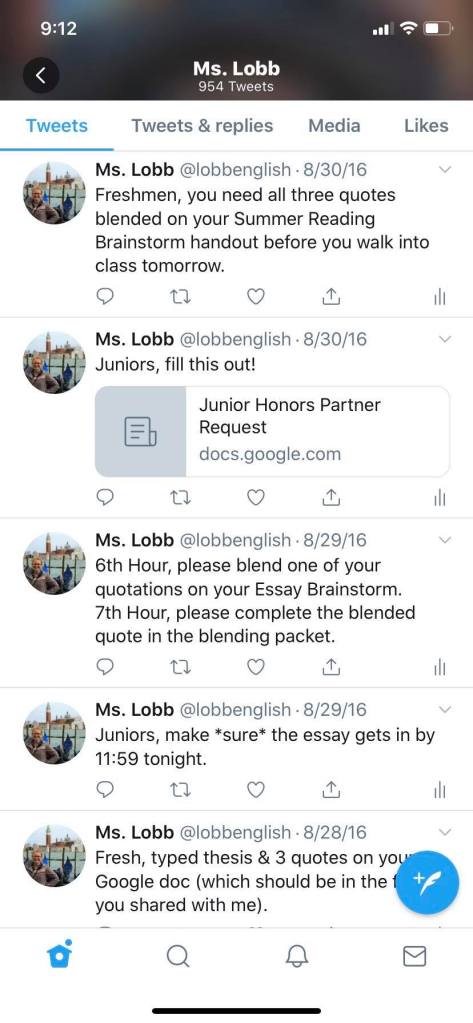
About five or six years ago, my goal was to get myself on Twitter and meet students where they were at. I tweeted homework every day at 3:00pm, shared articles I found, and narrated funny events that happened in class.
And then students stopped following me.
I wasn’t meeting them where they were at anymore. Instagram and Snapchat replaced Twitter.
And so I had to shift my perspective on how I could make Twitter work for me professionally.
Today, Twitter’s where some of my most powerful PLCs live.
In our #trysomething initiative, many teachers expressed interest in upping their Twitter Game. So in Part I of our installment of Upping Your Twitter Game, we give you The Three Educators You Should be Following on Twitter.
* a note *
I had a lot of options to sort through. As I whittled this down I tried to focus on those creating original content, not just retweeting content out there. I also wanted to make this as high-impact as possible, meaning that although Twitter is a platform that will help connect you with ideas and people, remember that it’s really just a means through which you can access PD in more than 280 characters. So Twitter links to websites, online magazines and newspapers, blogs, podcasts, and video content.

So let’s start big. The Cult of Pedagogy is run by a team of people who curate content first and foremost through their blog, but also have a podcast and a big Twitter following. Jennifer Gonzalez is the Editor-in-Chief and is probably who most of us associate with the site. She’s a former middle school ELA teacher, so she has great cross-curricular literacy-based posts, but they also have great content on instruction, classroom management, and technology.
She recently tweeted out her “6 EdTech Tools to Try in 2020“, which I’d been looking forward to. I hadn’t heard of any of the tools, and I’m excited to try Floop (as in “Feedback Loop”) which gives real time feedback on visual work. Another one of my favorite posts is “20 Ways to Cut your Grading Time in Half.”
She gives you a lot of ways to follow her team, so choose one that works for you.

There are so many tech integration specialists, tech educators, Google certified educators on Twitter. And a lot of them produce really practical tech content.
One that I really like is Matt Miller, who runs a team at “Ditch that Textbook.” His mission is to use tech in meaningful and engaging ways. He describes his tips as “Use it in class tomorrow” practical PD. Again, he has a podcast and a follow-up blog.
For those of you interested in quick podcast PD — he publishes five minute quick tip podcasts every. single. day. It’s pretty incredible.
I liked one of his recent posts, which isn’t actually tech-focused, but, rather, assessment focused: “4 Classroom Strategies to Avoid ‘Gotcha’ on Tests and Quizzes.” And these are really simple, but upon reflection, things I don’t actually include on tests. Questions like “What do you know that I didn’t ask you on the test,” or “Explain why you answered one of the questions like you did.” I’m an English teacher, and as I’ve moved to more multiple-choice skill-based tests recently, I wonder how including questions like this could not only help students be rewarded for what they do know, but also help me to assess the validity of my tests.
He has a post titled “15 Ways to Use Snapchat in Schools,” posts on video creation, sketchnoting, beginning of the year activities (bookmark this for later, people…) and so much more.
Other EdTech gurus we love: @jakemillertech, @sdcthailand, @PHausEDU, @WeGotTechEd

We have a lot of teachers in the district moving into BlendEd learning next year, and there are lot of educators presenting both philosophical and practical content. Maureen Ritter, one of our current BlendEd teachers, recommended that I follow Catlin Tucker, and I’m really glad I did.
I’ve found a lot of value in her posts about station rotations — which might be helpful for blended or non-blended teachers — here’s math, here’s English, here’s kinesthetic rotations. I think this is a strategy that we often connect to lower grades, but she gives practical tips to facilitate this.
I also liked her post on grade interviews with students, which essentially sounds like a prepared argument. Students come to her with a letter grade they think they deserve in addition to specific, prepared evidence. This ignites an evidence-based conversation, back and forth for three minutes. Follow her on Twitter or on her blog — especially if you’re curious about the BlendEd experience.
There is so much on Twitter that you can use for professional development. As high school educators, we’re really content-focused. Use Twitter to help inspire you in your specific area.
Start nationally. What governing bodies help to drive your content’s philosophy? Follow them. Then look at the state and collegiate level. Maybe it’s in Illinois, maybe it’s not.
If you teach living authors, or if living authors are experts in your field, follow them. You’ll find access to new articles, videos, and general inspiration for projects and authentic assessments. Talk to Jen Naes if you want help researching the most relevant leaders in your field who are also active on social media.
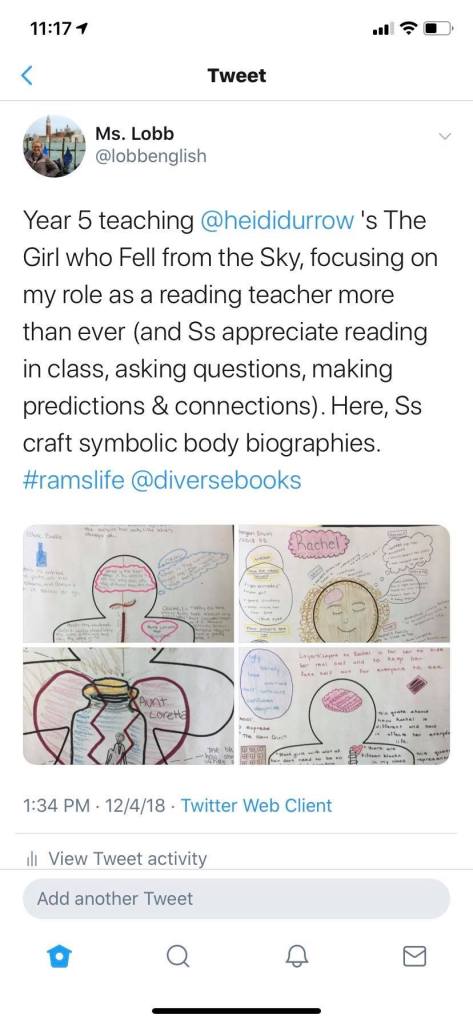
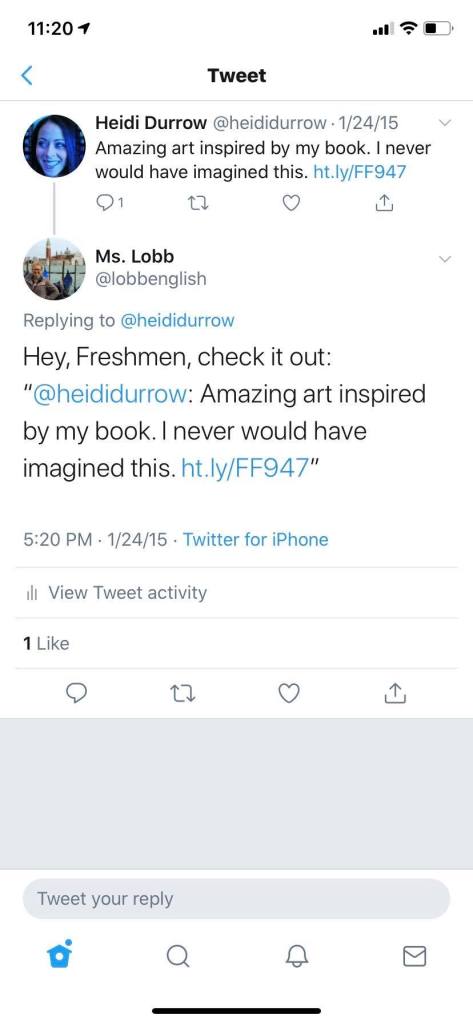
As a Freshman English teacher who has finally moved into a curriculum in which we’re teaching diverse, living authors, I’ve never seen students more engaged or excited when I’ve tweeted photos of student work at authors, who then respond.
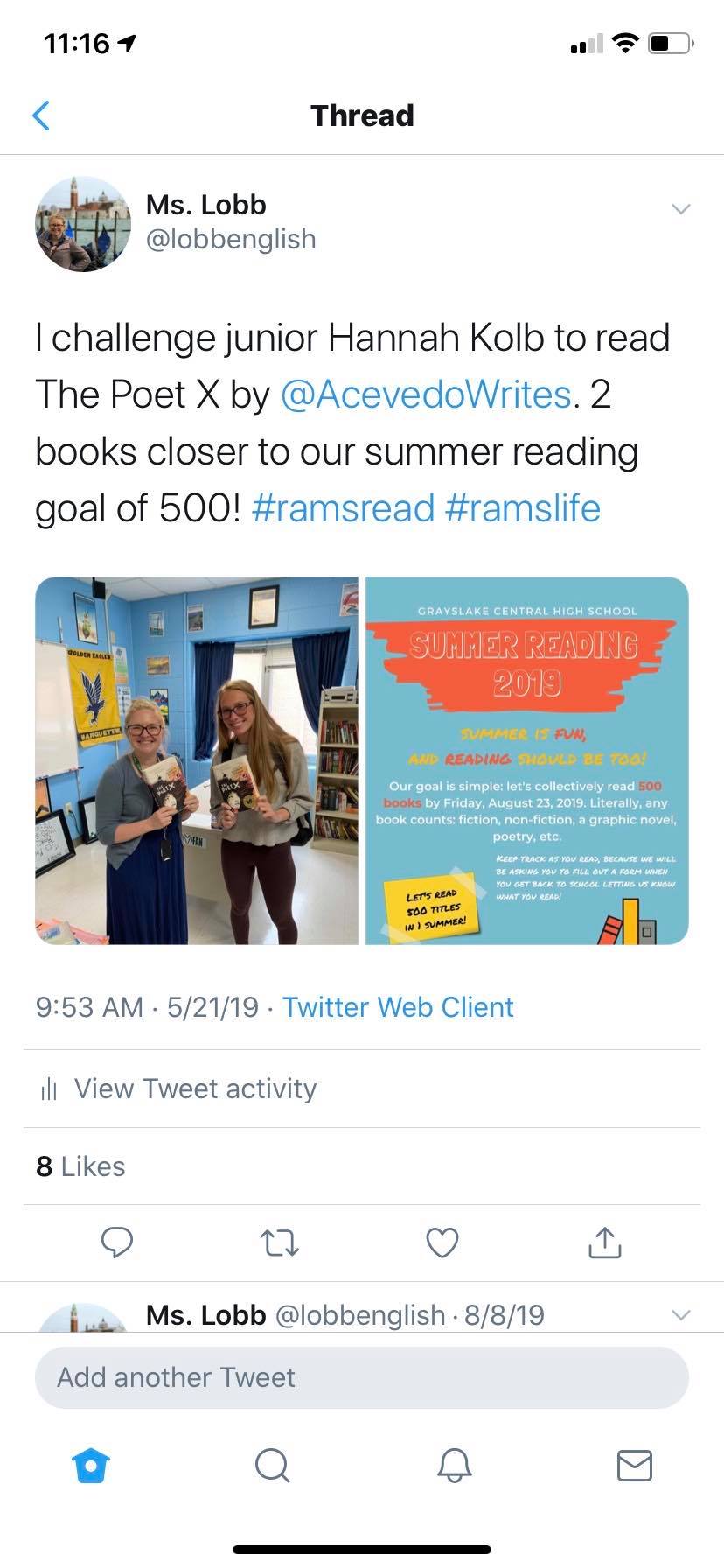
As a sidenote, I’ve also found a lot of value in finding other high school English teachers on Instagram. Honestly, social media research is kinda like research in any other realm: find one good source, and Instagram or Twitter will help lead you down a rabbit hole of 20 more to follow.
Happy Tweeting, Rams.

